
Chemical Peels for Acne & Acne Marks
Clearer skin. Fewer breakouts. More even skin tone.
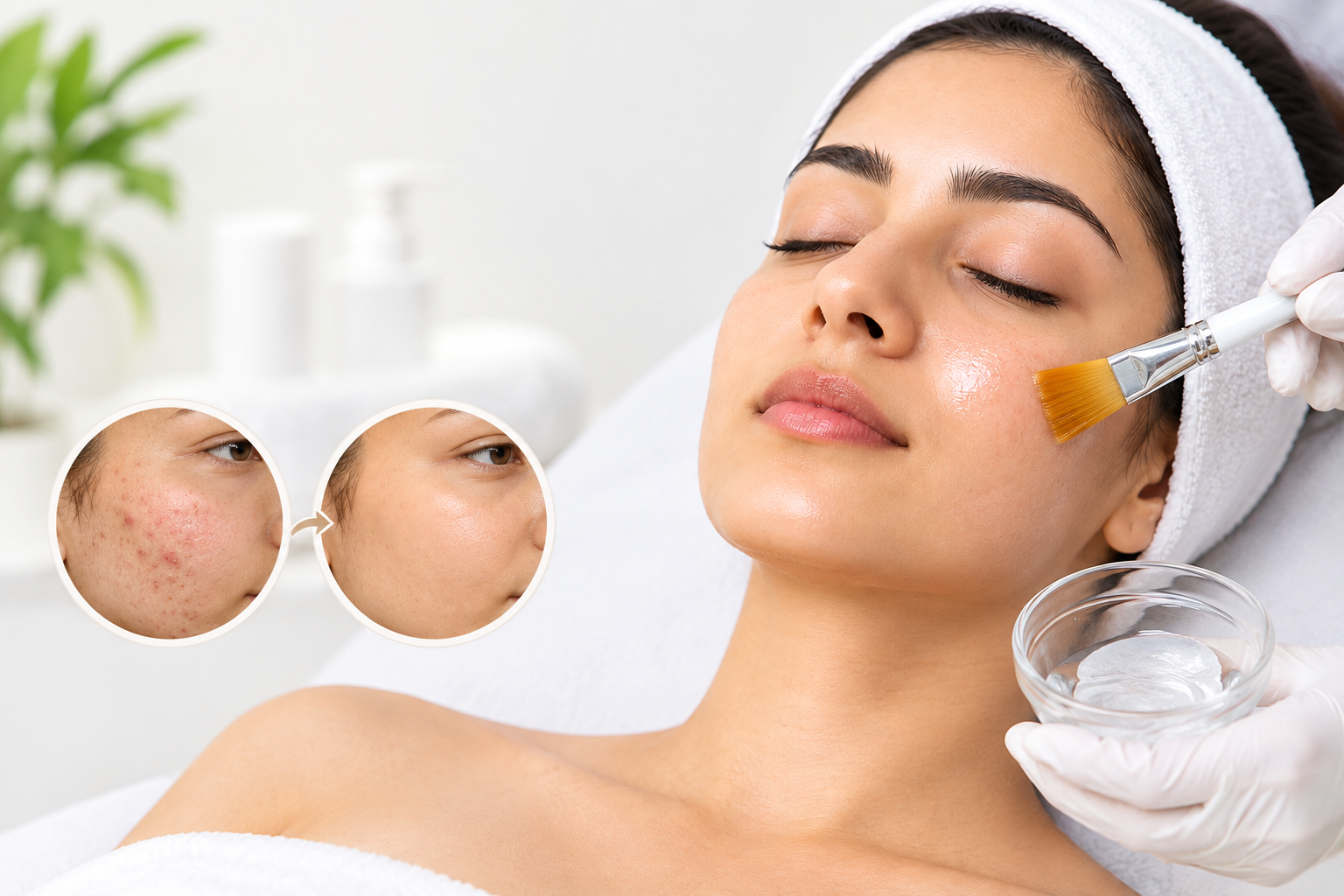
Chemical peels are dermatologist-led treatments, performed by aestheticians, that use carefully selected exfoliating agents to improve active acne, clogged pores, excess oil, post-acne pigmentation, acne marks and uneven skin texture.
At Arna Dermatology & Aesthetics in Jubilee Hills, Hyderabad, we customise the type and strength of peel according to your acne, pigmentation, skin type, sensitivity and previous treatments.
Our peel options include BioRePeel, salicylic acid, mandelic acid, azelaic acid, glycolic acid, combination peels, black peel, TCA and selected medium-depth peels.
Book an acne consultation with our dermatologist in Jubilee Hills, Hyderabad.
What are chemical peels for acne?
Chemical peels are professional skin treatments a carefully selected chemical solution to the skin to produce controlled exfoliation.
For acne-prone skin, the right peel can help:
* Unclog pores
* Reduce excess oil and congestion
* Improve certain types of active acne
* Reduce the appearance of post-acne dark marks
* Improve uneven skin tone
* Smooth rough skin texture
* Improve overall skin brightness
* Support an acne treatment plan
Chemical peels can help with some types of acne by removing dead skin cells and excess oil that clog pores.
Importantly, there is no single “best chemical peel for acne.” The appropriate peel depends on whether the primary concern is active acne, oiliness and congestion, post-acne pigmentation, texture or scarring.
Which chemical peel is right for you?
At Arna, we don’t follow a one-size-fits-all approach.
BioRePeel
A professional peel option that can be considered when the goals include improving acne-prone skin, pigmentation, texture and overall skin quality, depending on individual suitability.
Salicylic Acid Peel
Particularly useful for oily, acne-prone and congested skin. Salicylic acid is a beta-hydroxy acid that works within the pore environment and can help reduce congestion.
Mandelic Acid Peel
A gentler alpha-hydroxy acid option that can be considered for acne-prone skin, uneven skin tone and pigmentation, particularly when a milder approach is preferred.
Azelaic Acid Peels
Useful when acne and post-inflammatory pigmentation are both concerns. The treatment may be incorporated into a broader acne and pigmentation management plan.
Glycolic Acid Peel
Glycolic acid is an alpha-hydroxy acid that provides controlled exfoliation and may be selected when the goal includes improving skin texture, dullness and superficial pigmentation.
Combination Peels
Different acids or active ingredients can be combined or layered strategically when the patient has multiple concerns such as acne, oiliness, pigmentation and uneven texture.
Black Peel
A specialised peel treatment that may be considered for selected patients with oily, congested and acne-prone skin, depending on the clinical assessment.
Medium-Depth Peels
Stronger peels, including phenol-based treatments, require careful patient selection and medical supervision. They are not appropriate for every acne patient.
Acne vs Acne Marks: Why the Peel Matters
If you have active acne
The treatment objective is primarily to control:
Depending on your acne severity and skin type, your dermatologist may recommend a peel such as salicylic acid or another appropriate superficial peel as part of your overall acne treatment.
If you have acne marks
Once the active acne is controlled, the focus may shift towards:
Peels containing ingredients such as glycolic acid, mandelic acid, azelaic acid or carefully selected combination treatments may be considered depending on the pigmentation and your skin type.
If you have acne scars
Chemical peels are not the right treatment for every type of acne scar.
Depressed or deeper acne scars may require procedures such as microneedling, subcision, fractional laser or combination scar treatments. Chemical peels may sometimes form part of a broader acne-scar treatment plan. The AAD notes that chemical peels can be used for certain depressed acne scars, with the strength and number of treatments determined by the dermatologist.
How many chemical peel sessions will I need?
Most patients require a series of treatments rather than a single peel.
For many acne and acne-mark concerns, approximately 3–4 sessions may be recommended to achieve noticeable improvement.
The interval is customised according to the peel used and your skin’s response. In general, sessions may be spaced approximately 3–6 weeks apart.
The exact number and interval can vary depending on:
- Type of acne
- Severity of acne
- Pigmentation
- Skin type
- Type and depth of peel
- Previous acne treatments
- Skin sensitivity
- Response to earlier sessions
Mild and superficial peels commonly require multiple sessions rather than one treatment, which is consistent with dermatology guidance.
What happens during an acne chemical peel?
Dermatologist consultation
Your skin is assessed for acne, pigmentation, sensitivity, active inflammation and scarring.
Peel selection
The dermatologist selects the appropriate peel based on your skin type and treatment objective.
Skin preparation
Your skin is cleansed and prepared before the peel is applied.
Application
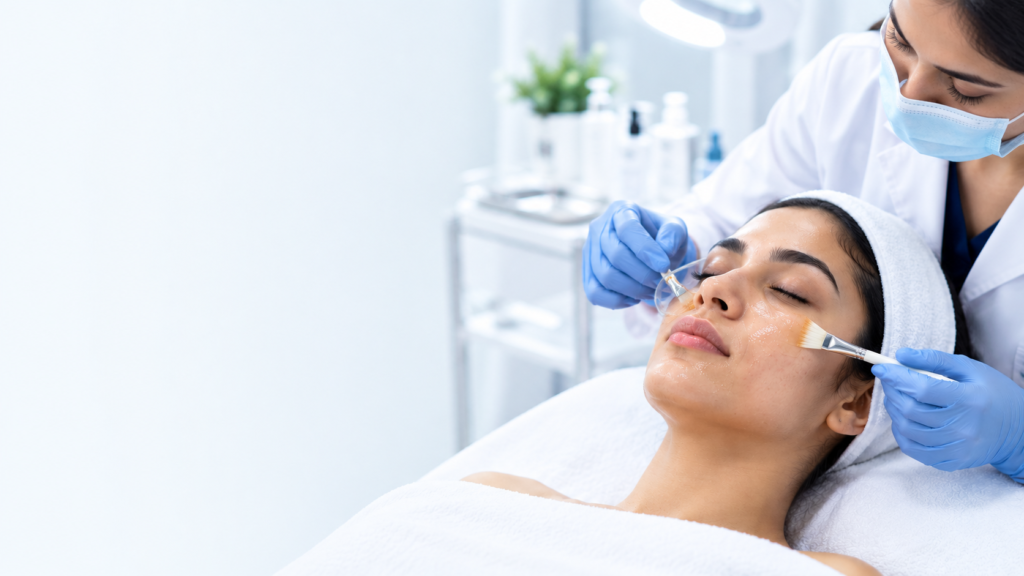
The selected chemical peel is applied for a carefully controlled duration according to the formulation and treatment plan.
Post-treatment care
You will receive specific instructions regarding cleansing, moisturising, sun protection and active skincare products.
Follow-up
Your response is assessed before planning the next session.
Why choose Arna Dermatology & Aesthetics?
Dermatologist-led treatment
Every peel should begin with understanding why you have acne or pigmentation, rather than simply choosing an acid.
Multiple peel options
We offer a range of superficial and selected medium-depth peels, allowing treatment to be customised according to the patient’s concerns.
Acne + pigmentation approach
We treat the active acne as well as the marks it leaves behind, rather than focusing only on surface exfoliation.
Personalised treatment plans
Your peel strength, interval and number of sessions are determined according to your skin and response to treatment.
Integrated dermatology & aesthetics
When acne has resulted in persistent pigmentation, textural changes or scars, additional procedures may be considered as part of a comprehensive treatment plan.